

Introduction to piano paint process
Mar 22, 2024
Let's continue to learn more about what "piano paint" is.
1. Paint:
As a paint, piano paint is a type of polyester paint, that is, PE paint. Strictly speaking, it should be unsaturated polyester PE piano paint, which is a high-gloss unsaturated polyester paint. The reason for this requirement is that various common paints, such as polyurethane PU paint, nitrocellulose NC paint, light-curing UV paint, etc., all have high-gloss mirror paint, but the principles of high-gloss curing are different. Some of these paints are difficult to distinguish from piano paint in appearance.
Here, the author summarizes that the characteristics of piano paint are that the paint surface is very bright, easy to scrub, not easy to peel off, not easy to oxidize, and will not turn yellow after long-term use. The disadvantage is that it is easy to attract fingerprints and scratches when rubbed against hard objects.
2. Craftsmanship:
This is the key. The so-called piano painting process is a process in which the workpiece is not allowed to solidify naturally after spraying or painting. Instead, the workpiece is sent to the paint room and heated by electric heat or far infrared rays to solidify the paint layer.
Real piano paint is different from ordinary baking paint. It is made of multiple layers of baking paint. Piano paint requires multiple coats of paint, which is caused by the characteristics of the PE paint itself. Compared with PU paint, PE paint has a lighter color and higher transparency, and requires multiple coats of spray to achieve the effect we see. Generally speaking, real piano paint has at least three coats of paint, while the piano paint used on famous brand furniture has at least five coats of paint. As for a real piano, it actually has more than 10 coats of paint!
This brings about a characteristic of real piano paint - due to the extremely large number of paint layers, the thickness of the paint layer of piano paint is much thicker than that of other baking paints, and due to the characteristics of PE paint itself (PE paint cannot be sprayed with thin paint films , otherwise it is easy to deform), the thickness of each paint is much higher than that of PU and other paints. Even counting the primer and putty used to level the surface of the workpiece, the thickness of real piano paint is so thick that the number of layers can be seen with the naked eye.

3. How to identify piano paint?
There are two ways to identify piano paint, but both are destructive. Piano paint is actually like a piece of enamel, which is hard and brittle. If you hit the paint surface hard, the damaged area will only fall into pieces instead of falling off a film.
The baking paint has gone through a high-temperature process, so the surface of the baking paint can withstand short-term fire without major damage, which is not the case with spray paint, especially PU spray paint. In fact, we can also simply judge from this that if the material of the workpiece itself cannot withstand high temperatures, it will never be covered with piano paint, otherwise the workpiece will have melted away in the paint room. So the second way to identify it is to "bake" it!
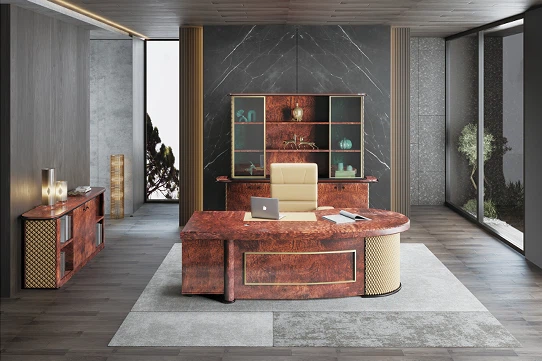
The biggest feature of ideal piano paint, that is, "real piano" paint, is actually a complete mirror effect. Although it cannot be compared with a mirror in terms of brightness, its surface should be completely flat and smooth, and the reflection should be non-existent. A little bit of distortion. This effect cannot be achieved by any kind of high-gloss paint treatment (whether using non-baking paint PE paint or other types of baking paint) except piano paint. This is also the reason why piano paint is noble and irreplaceable.